
Datawarehouse
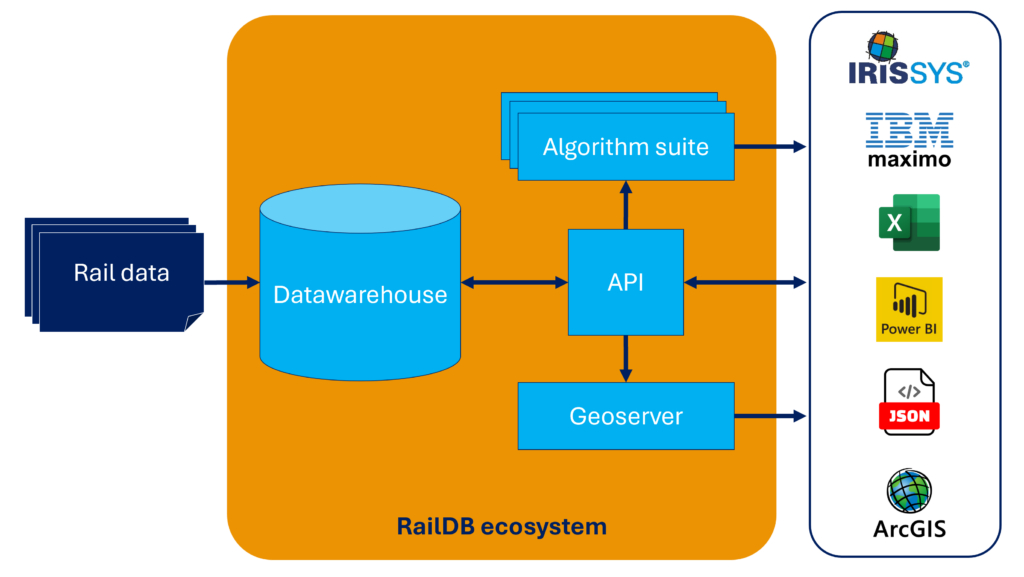
The datawarehouse holds all rail data and is the core of the RailDB system. All other components in the ecosystem plug into this datawarehouse.
API
The Automated Programming Interface (API) allows quick and easy access to the data in the datawarehouse. This is useful for data scientist or to connect RailDB to other applications.
Algorithms
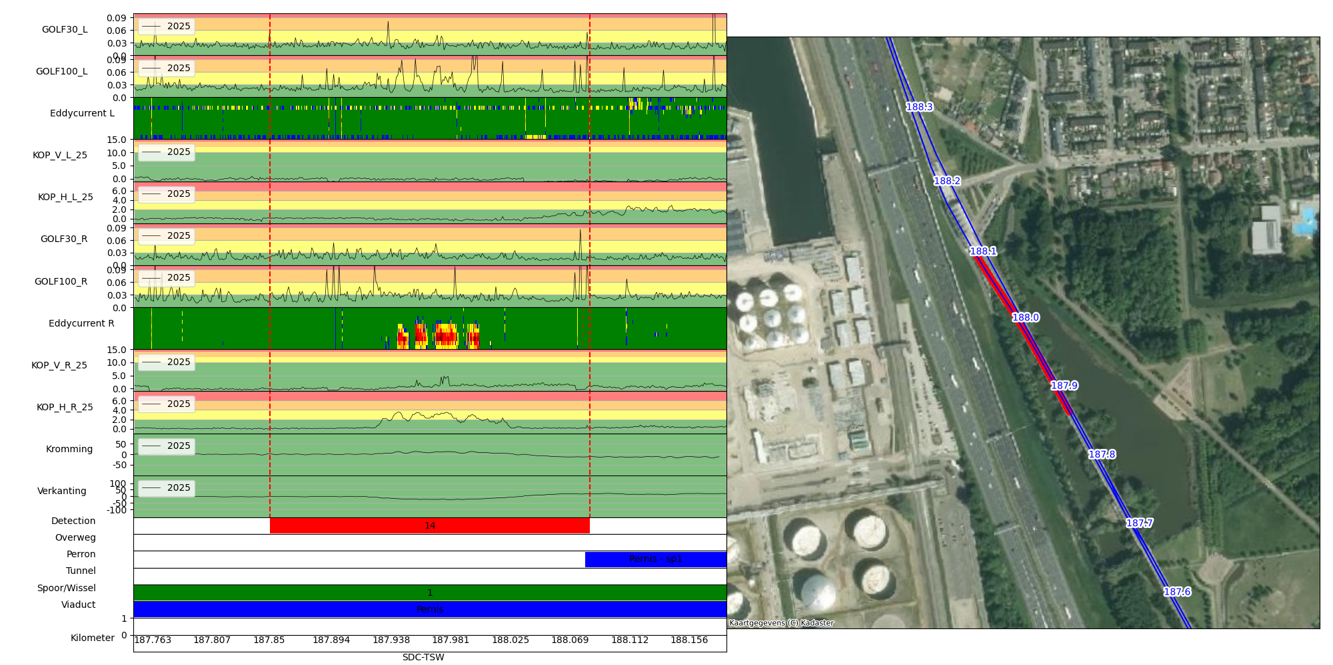
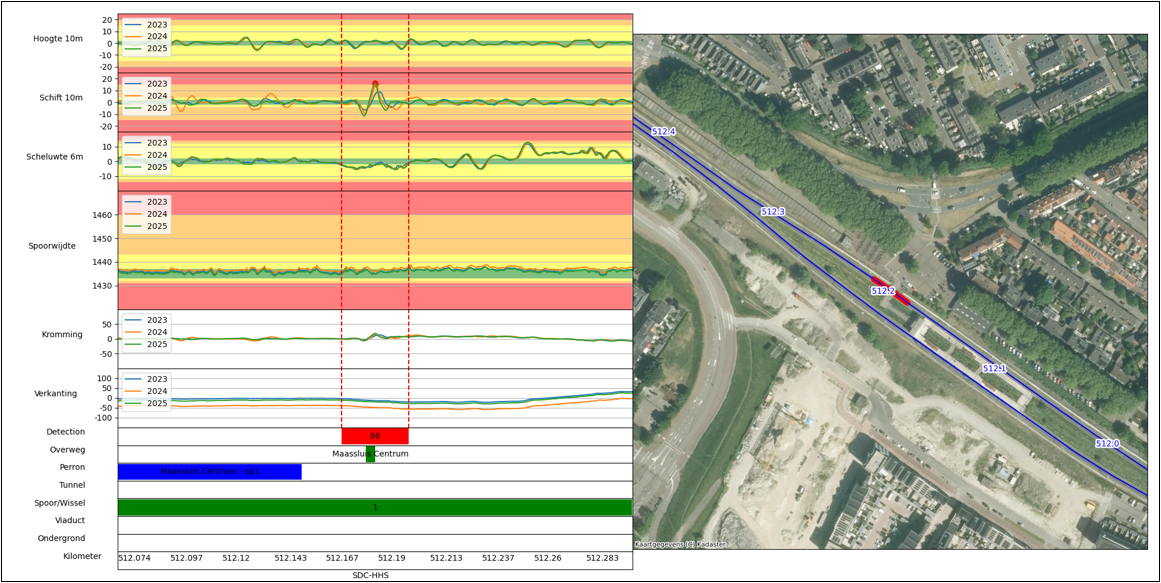
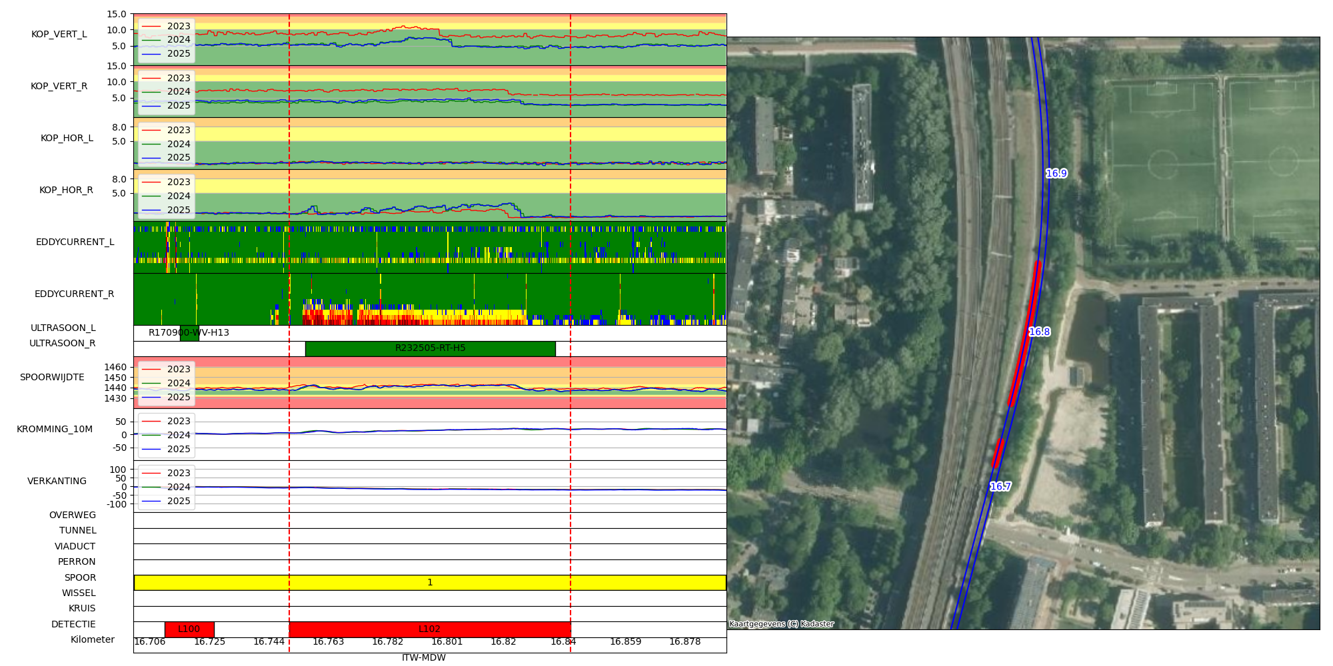
RailDB comes with an elaborate algorithm suite. The algorithms turn the data into information. It allows the user to automate most of the manual track analysis activities.
Mapservices
Mapservices like WMS and WFS are integrated into RailDB. This allows for quick and easy publication of data and algorithm results. These services are easily plugged into existing GIS applications.
The RailDB ecosystem
The RailDB ecosystem provides a suite of tools:
- Linear asset management (LAM) Datawarehouse as foundation
- API for configuration and direct data-access
- Algorithms to turn data into ready-made insights
- Mapservices for spatial insight in webGIS or desktop GIS apps
Why use RailDB?
There is more and more data to be analyzed by fewer and fewer people. To cope with this we need to automate the repetitive jobs. Additionally this makes work for the analysts more joyfull.
As experienced analysts retire, knowledge will leak out of the organisation. Part of this knowledge can be saved by capturing it in custom algorithms.

Analyses becomes ever more complex through the proliferation of contract requirements. A lot of this complexity can be absorbed by custom algorithms.

Rule based algorithms don't get tired or make mistakes. So quality is assured and delivery is fast.

Keeping large quantities of data organized and accessible is quite a challenge, especially over time. RailDB offers easy access in a highly structured manner to all of your rail data.
The Algorithm Suite
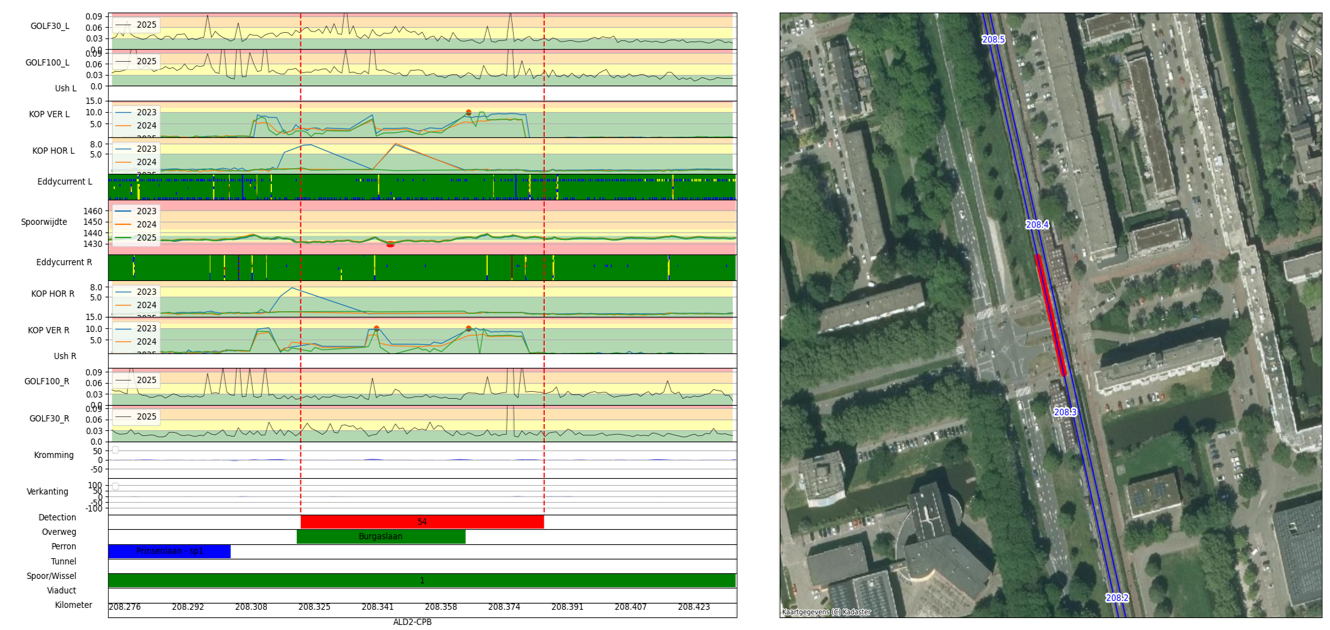
RailDB provides an algorithm suite for common analyses:
- Rail grinding planning
- Rail milling planning
- Rail replacement planning
- Geometry safety assessment
- Geometry temping planning
- Geometry predictions
- Rail wear predictions
- etc.


Lessons from 10 years algorithms
Computers are not here to replace people. Computers are here to support people with boring and repetitive tasks.
Data science is not a goal, it's a means to an end. Domain knowledge is and will remain necessary to make algorithms do anything useful.
Use "black box" algorithms like neural networks only when you really need to. We had most success with simple "rule based" approaches. Machine learning is mainly useful for image recognition.
Assessing and prioritizing potential maintenance location remains a job for humans (for now). Computers don't have enough common sense to do this, especially for safety critical analyses.
Slow and steady wins the race. Optimizing data, application, people and processes takes time. Frequent shifts in priorities and high employee turnover rates are the enemy of progress.
Also invest in people and processes. Working on your data and applications is not enough. Without trained people following a process the impact of the whole excercise will be zero.
Costs and benefits need to fall within the same organization. This is especially the case for algorithmic results of which the value far exceeds its initial investment. If this is not the case, a fight over money always ensues.
Ready to move your rail data to the next level?
Contact us to find out more about what RailDB can do to help your data thrive.